AI Cover Letter Generator: Write Cover Letters That Get Interviews
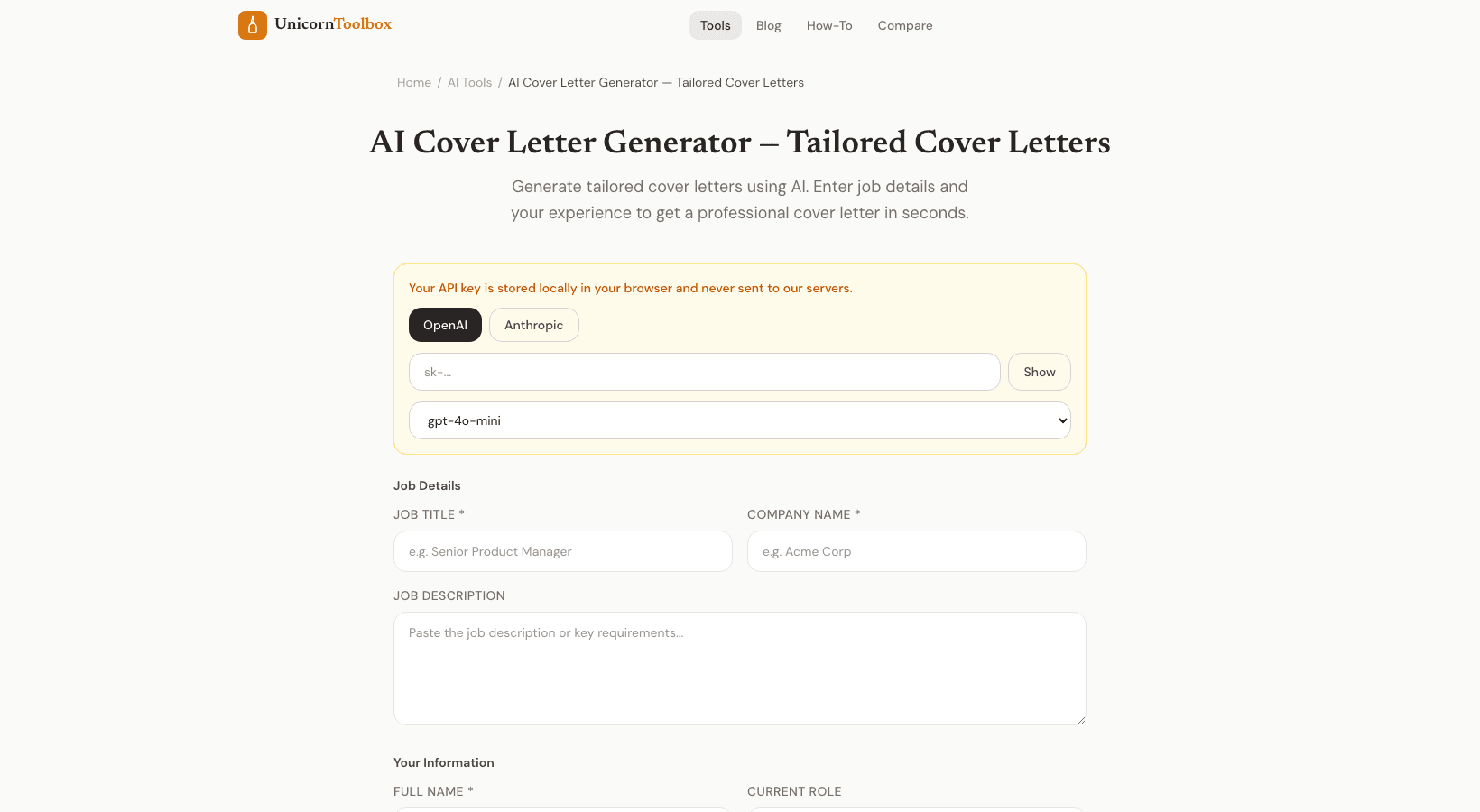
No one likes to write cover letters. You look at a blank page, try to sound excited without being strange, and somehow write three paragraphs about why you're the best person for the job. The AI cover letter generator uses your work history and the job description to write a good first draft that you can change to fit your needs. How It Works You give the tool two things: a short description of your skills and experience and the job you want to get.
The AI reads both and finds the parts that are the same. Then it writes a cover letter that shows off your most relevant skills for that job. It's not just a template with spaces filled in. The AI really links your background to what the employer wants.
It pulls out your project management experience and frames it correctly if the job requires it.
Why Should You Use AI for Cover Letters
Three reasons. The first thing is speed. You can make a personalized cover letter in 30 seconds instead of 45 minutes. That adds up quickly when you apply for a lot of jobs.
Second, the AI is good at finding keywords that go well together. Many businesses use applicant tracking systems (ATS) to look for certain words in the job description. The AI naturally includes those terms because it is based on the job posting itself. Third, it solves the problem of the blank page.
It's much easier to start with a structured first draft than to start from scratch, even if you rewrite every sentence. Should you change the output? Of course. The AI gives you a good start, but the best cover letters include specific details, like a project you're proud of, a result you got, or a real reason you want to work for that company.
You will stand out if you add those personal touches. You can think of the AI output as a rough draft by a good writer who doesn't know you. You need to add the "you" to the letter, which means specific numbers, stories, and personality that make it feel real. Real-Life Tips for Writing a Cover Letter Stay under one page.
Don't start with "I am writing to express my interest." Instead, start with your most relevant qualification. When you can, use exact numbers. For example, "managed a team of 8" is better than just "managed a team." And finish with a clear call to action, not just "I hope to hear from you." Are you ready to stop hating cover letters?