Free Pomodoro Timer for Better Focus and Productivity
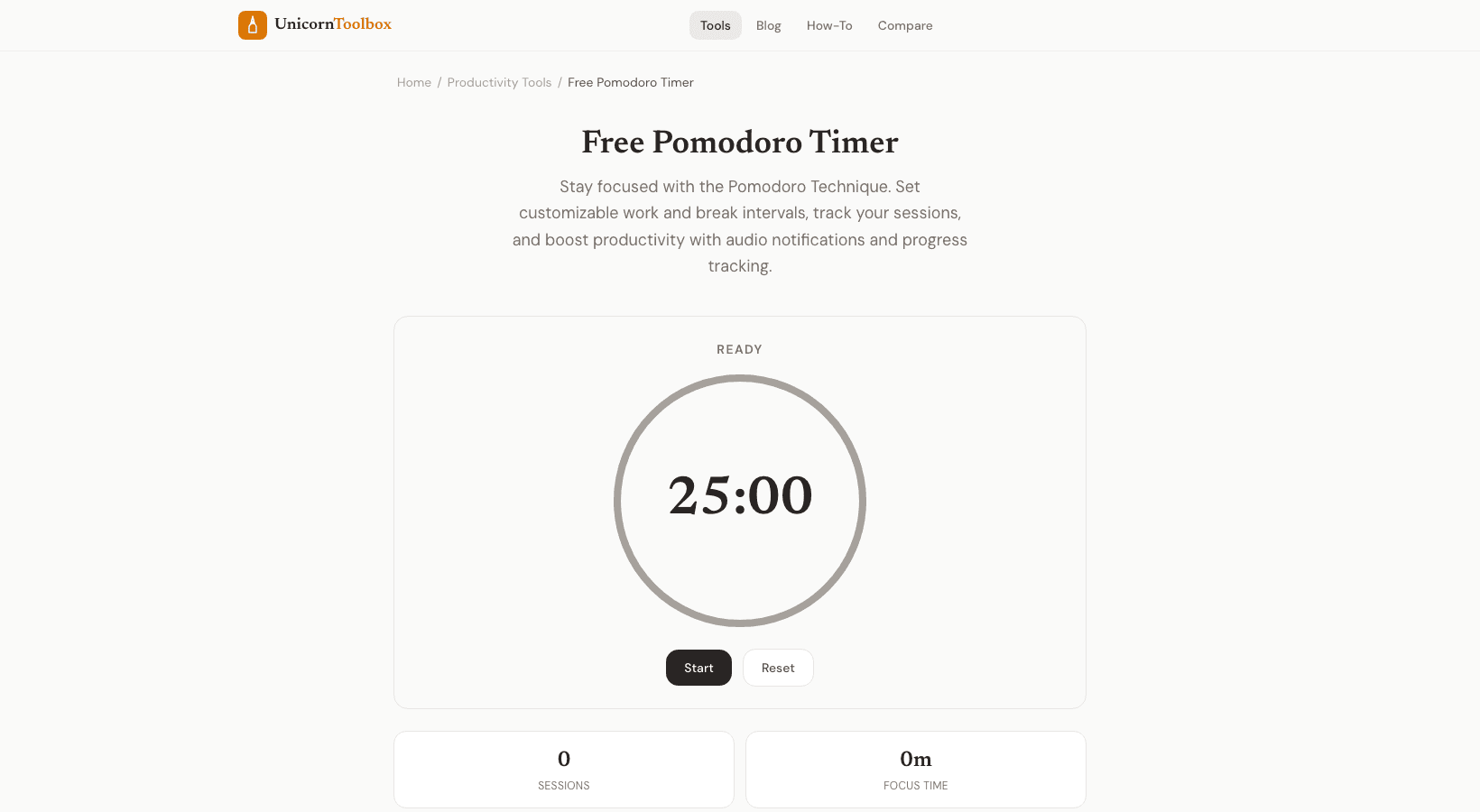
The Pomodoro method is very easy and very helpful. Take a break for five minutes after working for 25 minutes. Do it again. After four rounds, take a longer break.
That's all. And this timer makes it easy to keep going. Why the Pomodoro Method Works Your brain isn't made to focus for long periods of time. Your focus starts to fade after about 25 to 30 minutes of hard work.
Instead of fighting against this natural rhythm, the Pomodoro method works with it. Here's what really happens when I use it: knowing the timer is running puts just enough pressure on me to stay focused. And knowing that a break is coming in 25 minutes makes it easier to not check my phone or go on social media. The automatic thought is, "I'll check it during the break." It's also important to take breaks.
You can think about what you just did for those five minutes. When I take a break during Pomodoro, I come up with some of my best ideas. My brain keeps working even when I'm not there. How the Timer Works When you start the Pomodoro timer, a 25-minute countdown starts.
When it reaches zero, you will hear a sound and be told to take a break. When the break timer goes off, you get a message telling you to start the next work session. The normal cycle is as follows: You work for 25 minutes, then take a 5-minute break, then work for 25 minutes, then take a 5-minute break, then work for 25 minutes, then take a 15- to 30-minute break. Then begin again.
Personalization Not everyone does their best work in 25-minute chunks. You can change the timer: The work time can be 15, 25, 30, 45, or 60 minutes. Break for 3, 5, or 10 minutes 15, 20, or 30 minutes of a long break Three, four, or five work sessions before a long break Sound alerts: different alarm sounds or no sound at all I work for 30 minutes and then take a 7-minute break. It took some trial and error to figure out what works for me, so try out the settings.
Statistics that come with the program The timer keeps track of how many Pomodoros you finish each day. Seeing the count go up is surprisingly motivating. On a productive day, I want to do 8–10 Pomodoros. The stats help me see patterns, like how I always get more done in the morning than in the afternoon.
Best Ways to Do Things A few things I've learned from using this method for years: before you start a Pomodoro, choose one task and don't switch tasks during the session. If something comes to mind while you're working, write it down and deal with it later. And really take the breaks; skipping them defeats the purpose.