Free Profit Margin Calculator for Small Businesses
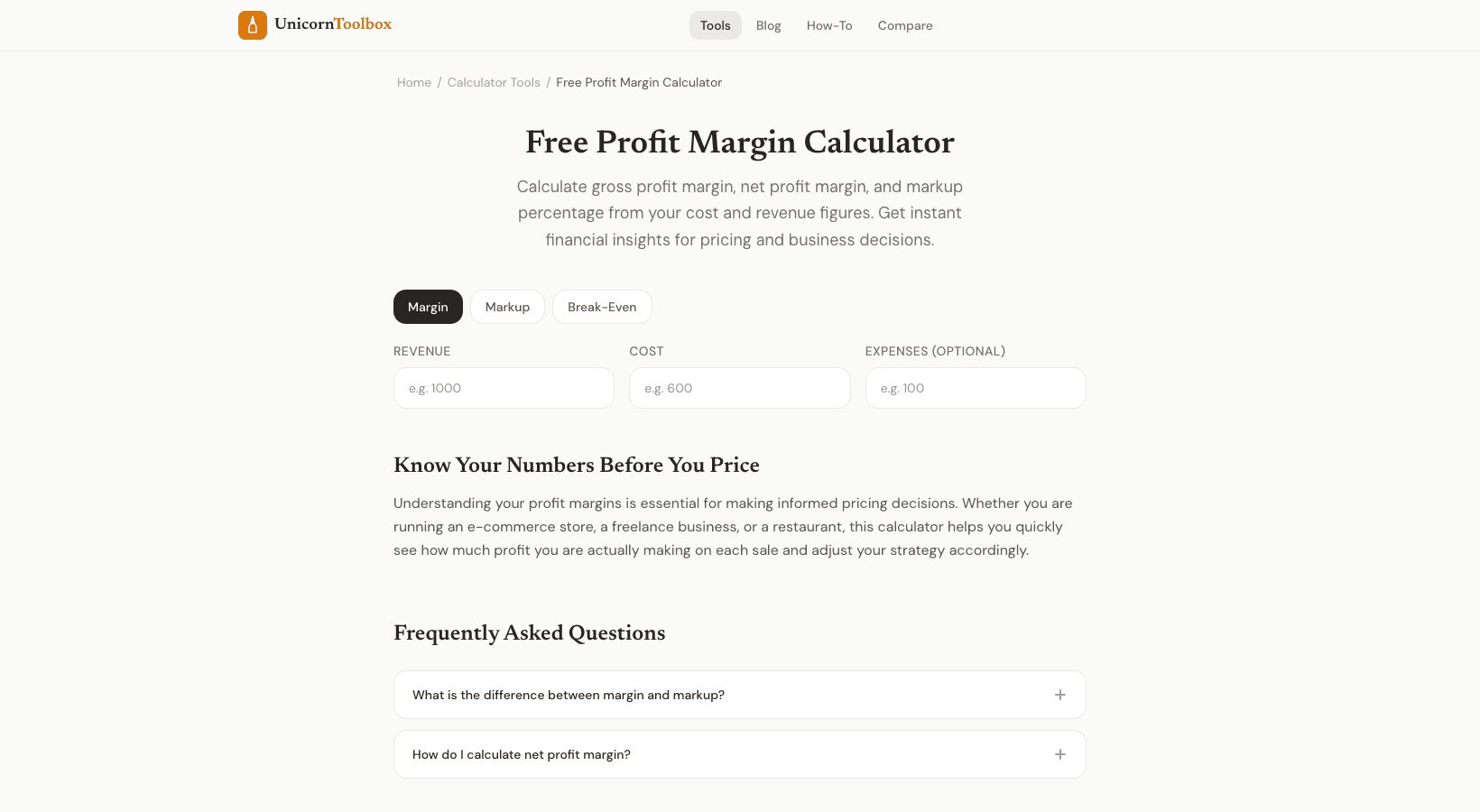
Knowing your profit margin is the difference between running a business and guessing at one. Whether you're pricing a new product, evaluating a service, or figuring out if a deal is actually worth it, a profit margin calculator gives you the numbers you need to make smart decisions.
Gross Margin vs. Net Margin vs. Markup
These three get mixed up constantly, so let's clear it up:
- Gross margin — What percentage of your revenue is left after subtracting the direct cost of goods. If you sell a candle for $30 and it costs $10 to make, your gross margin is 66.7%.
- Net margin — What's left after ALL expenses (rent, salaries, marketing, taxes). This is your actual take-home profit percentage.
- Markup — How much you've added on top of cost. That $10 candle sold for $30 has a 200% markup. Same numbers, different calculation, very different percentage.
The profit margin calculator computes all three so you can see the full picture at once. I've seen people confuse markup with margin and end up pricing products way too low — this tool prevents that.
How to Use It
Enter your cost and either your selling price or your desired margin percentage. The calculator fills in everything else: revenue, profit per unit, margin percentage, and markup percentage. You can also work backwards — enter your target margin and it'll tell you what price to charge.
There's also a break-even calculator built in. Enter your fixed costs (rent, subscriptions, salaries) and it tells you how many units you need to sell to cover them. Really useful when you're launching something new and want to know when you'll start making money.
Practical Examples
Say you're selling handmade jewelry. Your materials cost $15 per piece, and you want a 60% gross margin. The calculator tells you to price at $37.50. Or flip it — you know the market price is $40, and you want to see if your $15 cost gives you enough margin. Plug it in: 62.5% gross margin. Not bad.
For service businesses, it works the same way. Your hourly cost (including salary, benefits, overhead) goes in as the cost, and your billable rate is the selling price.
Why This Matters
I've talked to so many small business owners who set prices based on gut feeling or what competitors charge without actually knowing their own margins. Sometimes they're making great money. Sometimes they're barely breaking even and don't realize it. Running your numbers through a profit margin calculator takes two minutes and can save you from a pricing mistake that costs thousands.