How to Create Study Flashcards Online Free
There is a lot of research that shows spaced repetition works, so flashcards are one of those study methods that do work. But buying real index cards and writing them out by hand? That gets old quickly, especially when you have to remember more than 200 terms. It's much faster to make study flashcards online, and you can look at them anywhere.
When I was studying for my AWS certification, I started using digital flashcards. A game changer. I could make cards at lunch and look at them on my phone while I was on the bus. Why use digital flashcards Paper flashcards are fine, but digital ones have some advantages.
You can mix them up so that you don't just remember the order. You can change them without crossing things out. You can also make flashcards online from anywhere, so you don't have to carry a lot of cards around. The flip animation also helps a lot more than you might think.
When you click to see the answer, your brain has to actually try to remember it instead of just passively reading both sides. How to Make Flashcards That Work Not all flashcards are the same. This is what really works: One idea per card. Don't put three definitions on one card.
Keep it small. Say it in your own words. If you copy the definition from the textbook word for word, you won't understand it. Put things in context.
Instead of just saying "Mitochondria = powerhouse of the cell," explain when and why it matters. Keep your answers short. If your answer is a paragraph, split it into several cards. Good Ways to Use Online Flashcards Study flashcards can help you learn just about anything, but they are especially good for: Vocabulary: words from other languages, SAT words, and medical terms AWS, CompTIA, PMP, and other certification tests Biology, chemistry, and anatomy are all scientific terms.
Dates and events in history: match the date with the event and its importance. Programming ideas, like method names, syntax patterns, and shortcuts How to Make Your Study Sessions More Effective Don't try to go through all 200 cards at once. Put them in groups of 20 to 30. Look over the ones you got wrong more often.
And study in short bursts. Three 15-minute sessions a day are better than one 45-minute session. The most important thing is to be consistent. It's better to do something than nothing, even if it's just five minutes of flashcard review while you wait for your coffee.
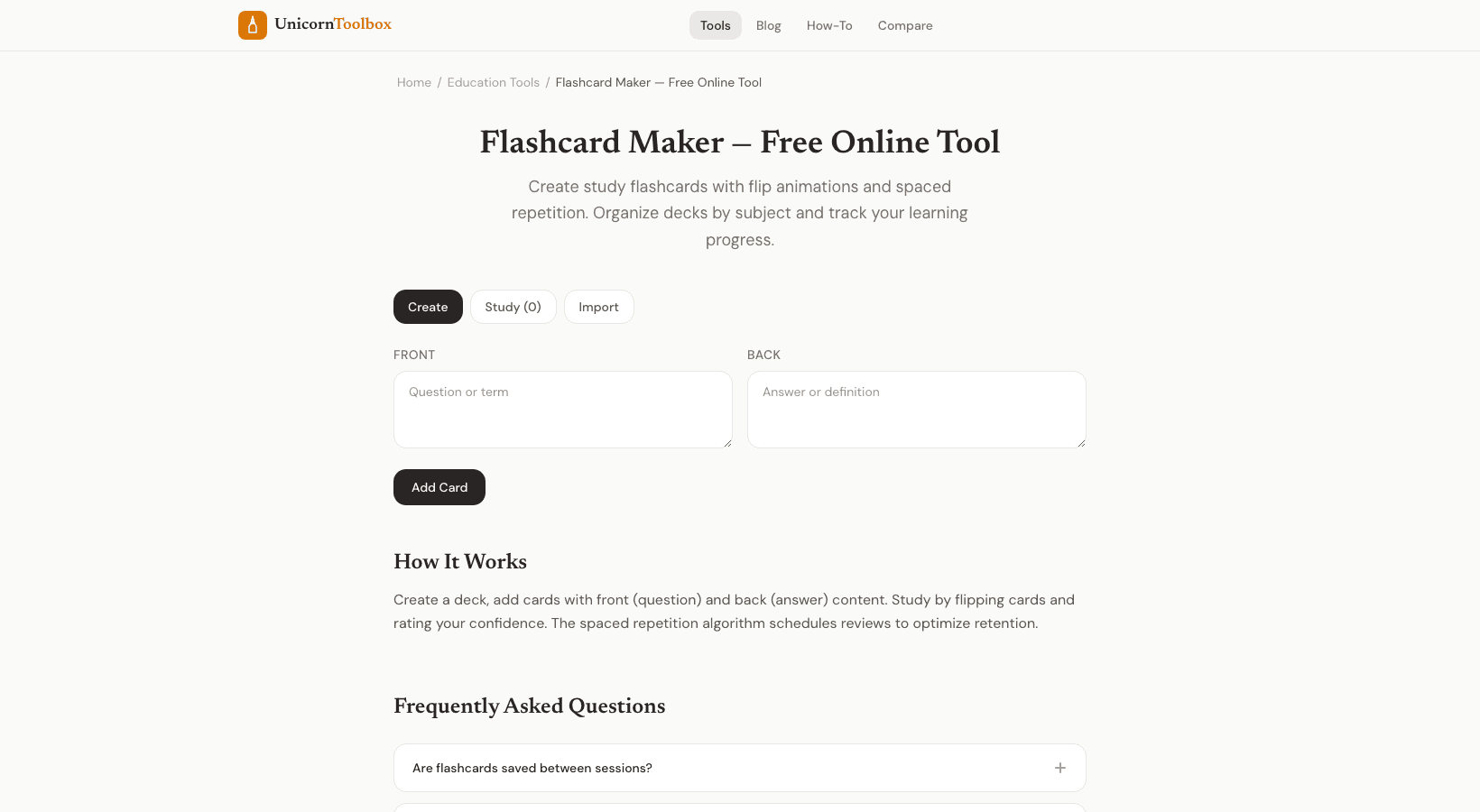
Those short breaks in your day add up quickly. With our flashcard maker, you can make as many cards as you want, flip through them with animations, and shuffle the deck whenever you want. You don't have to sign up or give any information; everything stays in your browser.